
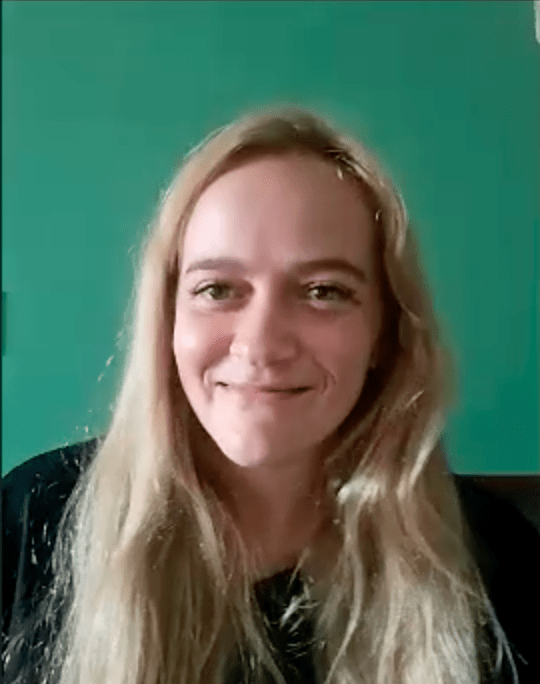
Dr Gai Lindsay
& introducing Leonè Van Rooyen (Head teacher, Penguin Class, Saigon Kids 1)
A rich partnership
I am so thankful for my partnership with Saigon Kids in Ho Chi Minh City, Vietnam. For several years, I have regularly visited Vietnam to conduct research and delivery professional learning sessions with the amazing Saigon Kids staff made up of international and local early childhood teachers and educators. A previous blog told the story of “The Inspiring Power of a Book” project and the way visual arts learning experiences offered the youngest children in the service opportunities to explore colour, texture, characters and identities through the connection with their favourite book.
“I have never believed, nor do I believe now, that a story belongs to only one person. Stories are always plural and their origins are infinite” (Malaguzzi, translated in Cagliari et al., 2016, p. 10).
A Tale of Ho Chi Minh City
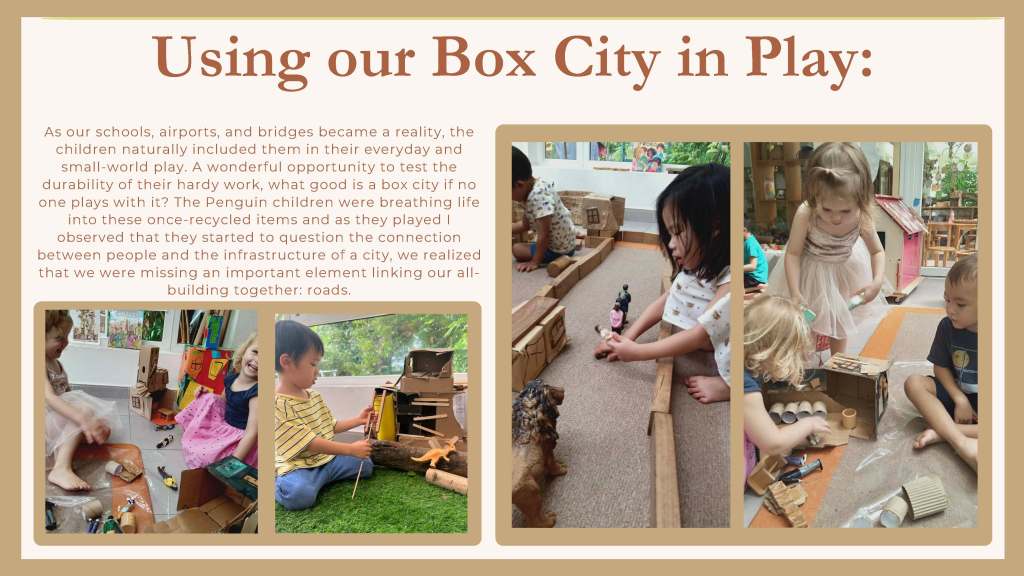
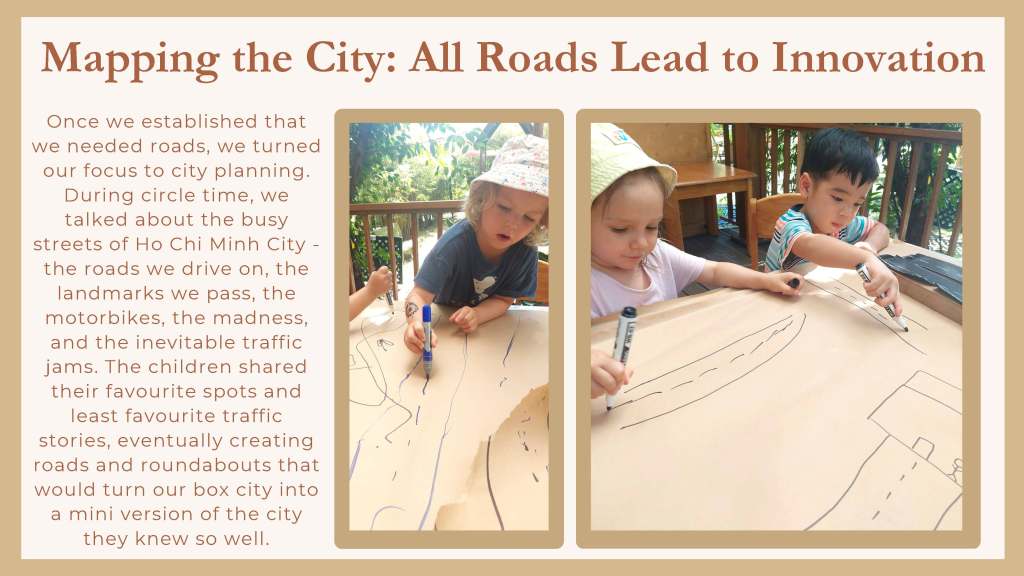
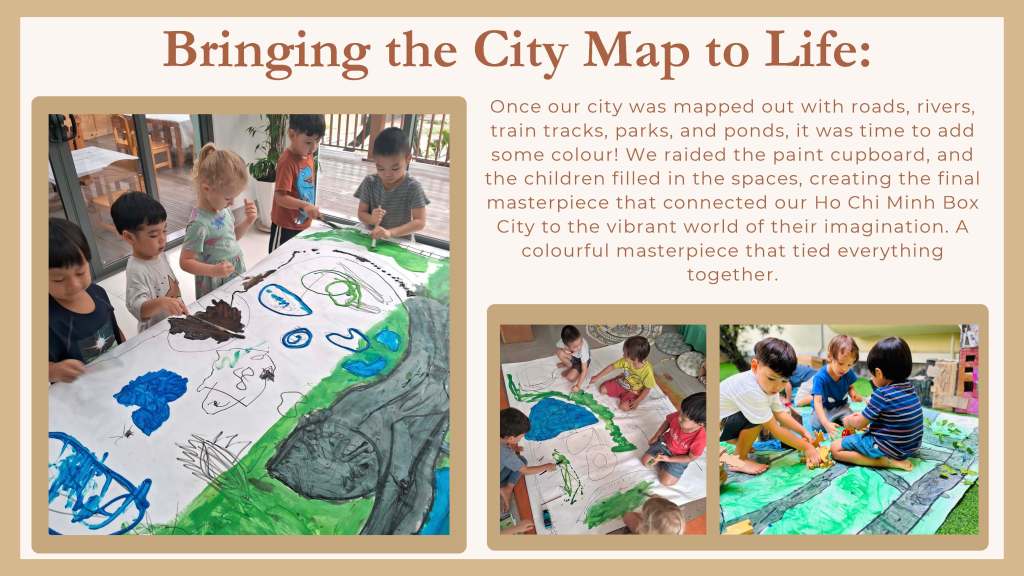
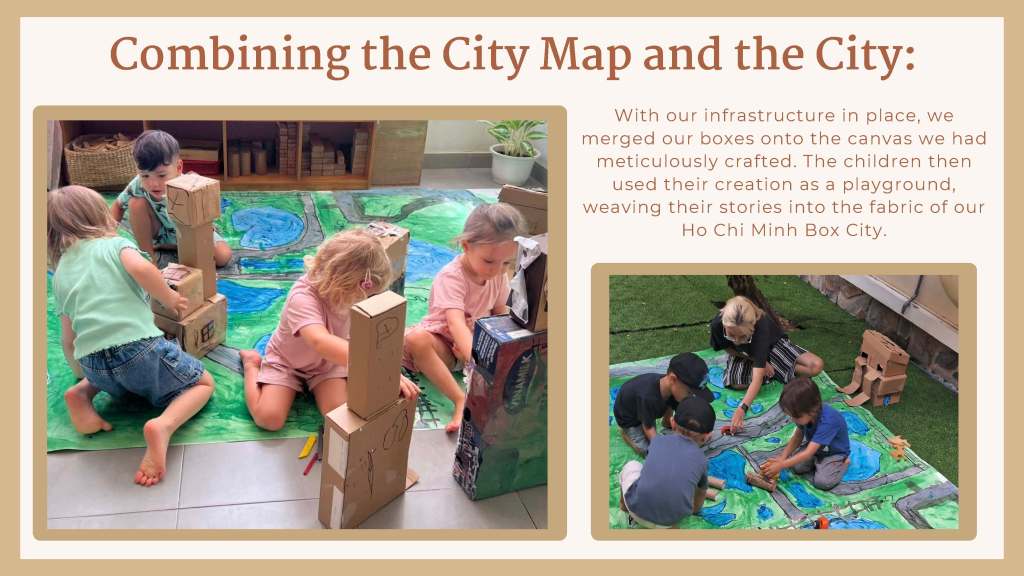
This blog shares the documentation about the Tale of Ho Chi Minh City project which was completed across the whole school year by Leonè (in partnership with co-teachers Cúc and Linh, and the children). I would especially like to thank the Penguin class children for their amazing work across a whole school year and thank their families for agreeing for their work to be published in this blog. Additionally, I would like to thank the whole Saigon Kids team, along with Jo Mitchell and Ms Kieu An, for inviting me to be part of the professional learning journey in your child-honouring, amazing early learning service.
When I was in Vietnam last year, our training sessions and conversations focused on the power of inquiry-based projects to connect children’s interests, questions and ideas through rich, multi-disciplinary approaches to planning and pedagogy. During my visits, I spent time in each classroom, getting to know the teachers and new staff and observing practice to be able to provide informed pedagogical support and training. This was when I first met Leonè Van Rooyen, the head teacher in the Penguin Class at Saigon Kids: campus 1. The Penguin class are aged 3.5 to about 4.5 years of age.
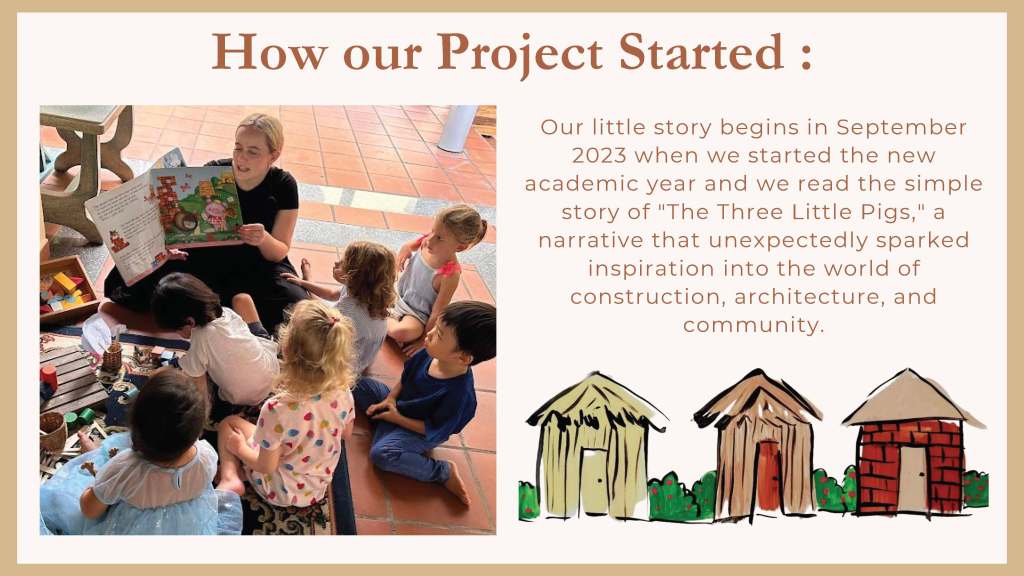
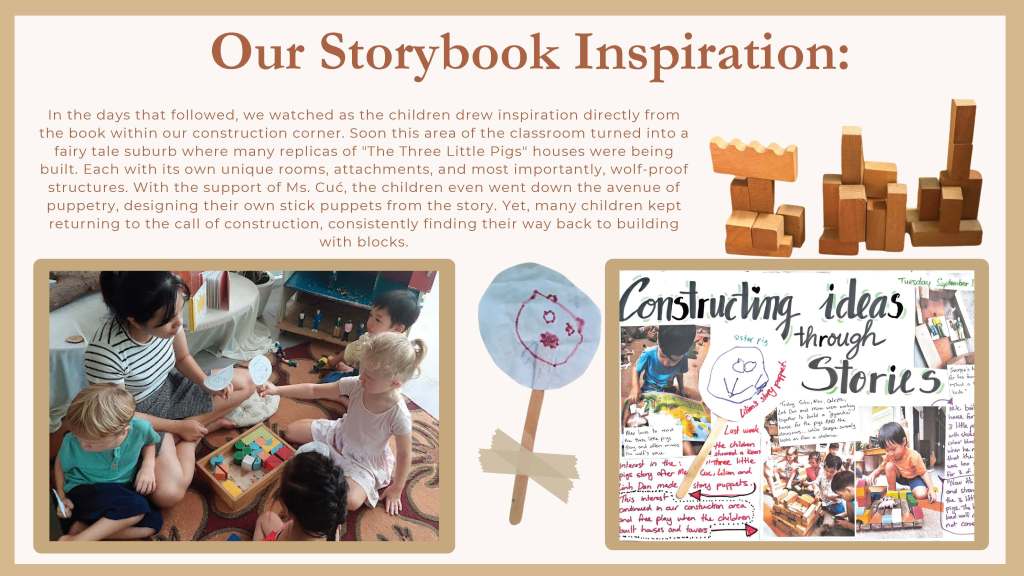
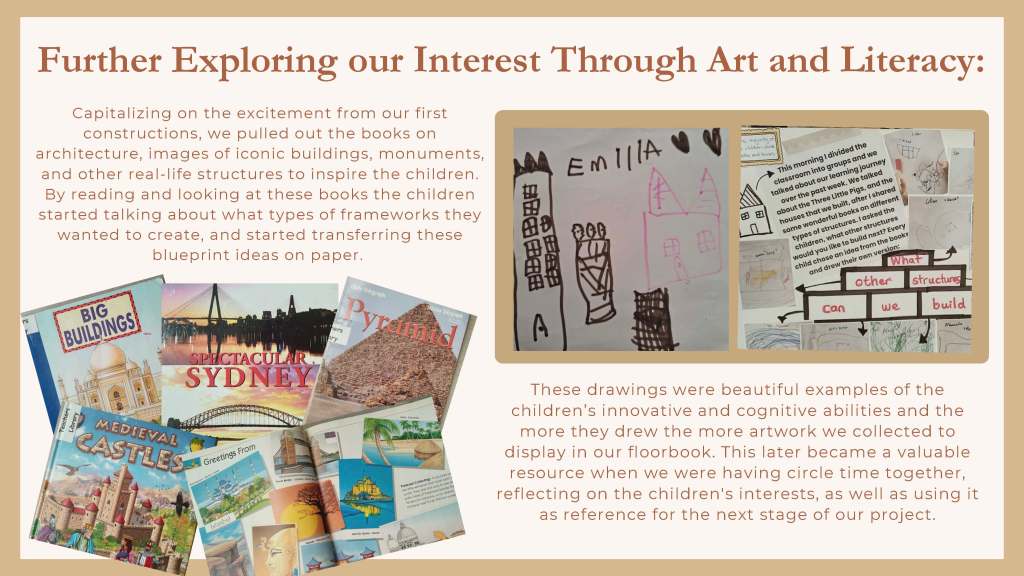
I had introduced the Floorbook Approach (see resource recommendations at the end of this blog) as a way for staff and children to collaboratively document, reflect and plan an inquiry-based project that spanned across the curriculum for a whole year. The children’s interest in the “Three Little Pigs” story sparked interest in building and dwellings, as illustrated in a floorbook page from early in the children’s year in the Penguin room (see image below).
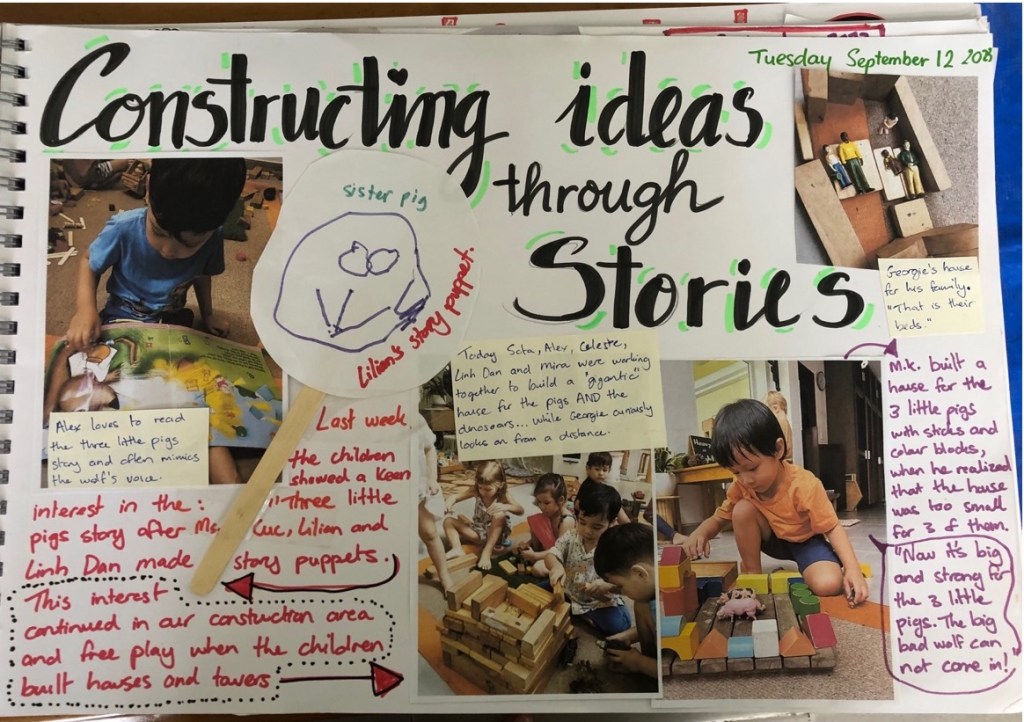
“Floorbooks create a child centred approach, which records the evidence of the process of play and the learning that comes from it” (Warden, 1994, p.2).
Leonè and I had some wonderful conversations as she introduced me to the children’s interest in buildings and construction and the very beginning of a possible project of inquiry focused on the city of Ho Chi Minh City (Saigon, Vietnam). This was a perfect opportunity to put our training into practice and test out the use of the floorbook to document children’s interests and to embark on a project of inquiry. This curriculum approach created powerful thinking and planning connections for the children; and for the teaching team in the Penguin class, Leonè, Ms Cúc and Ms. Linh, and amongst the families as well.
“Remember always that the best learners in the school must be the teachers – learning about the learning of the children. Passion and love are our daily duty in education” (Gambetti, 2008).
The experience and learning of the teachers
In the video interview (below), Leonè and I chat about the project. The documentation beautifully explains the project learning from the children’s perspective, but I also wanted to learn about the motivations, experience and learning from the teacher’s perspective.
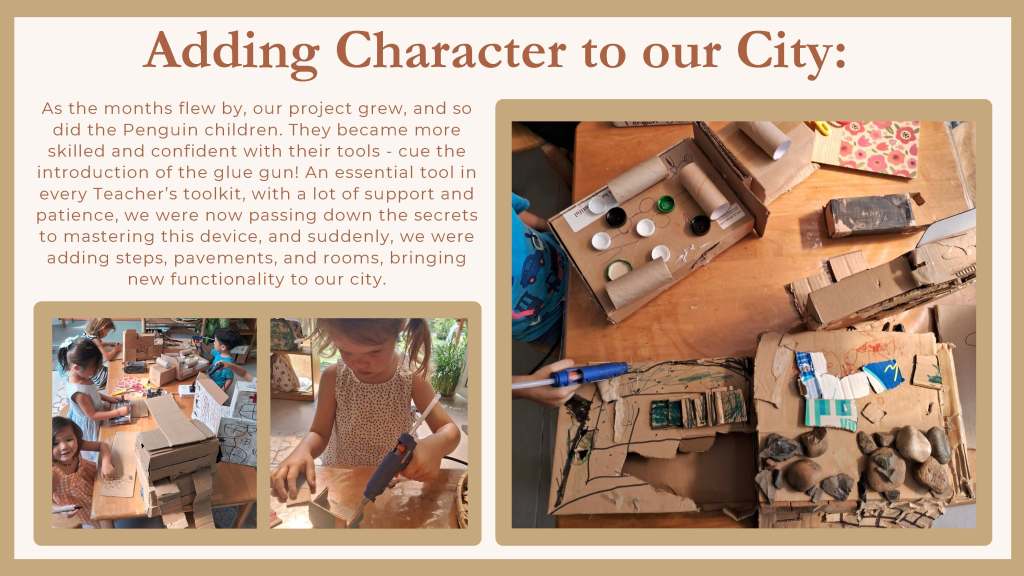
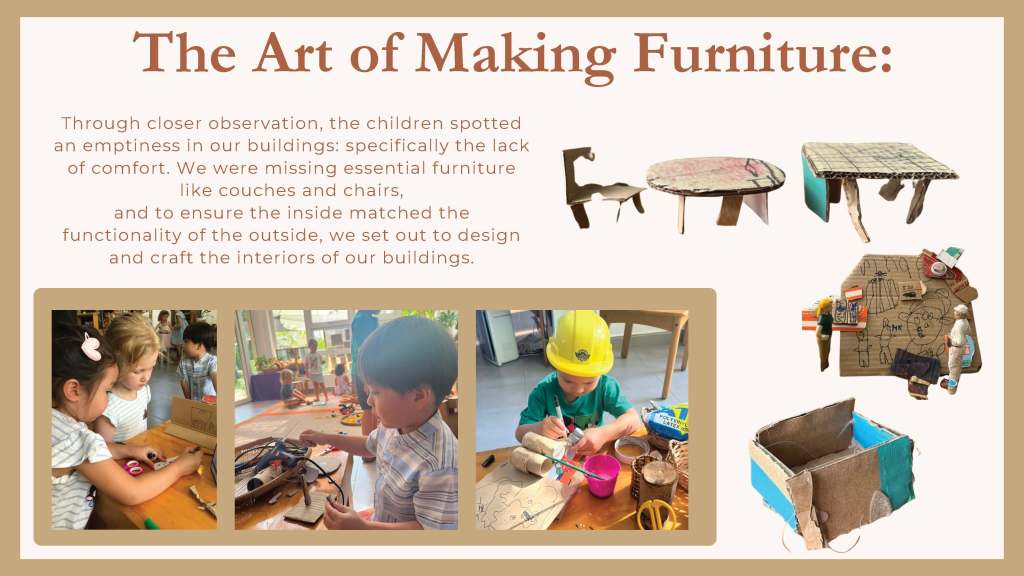
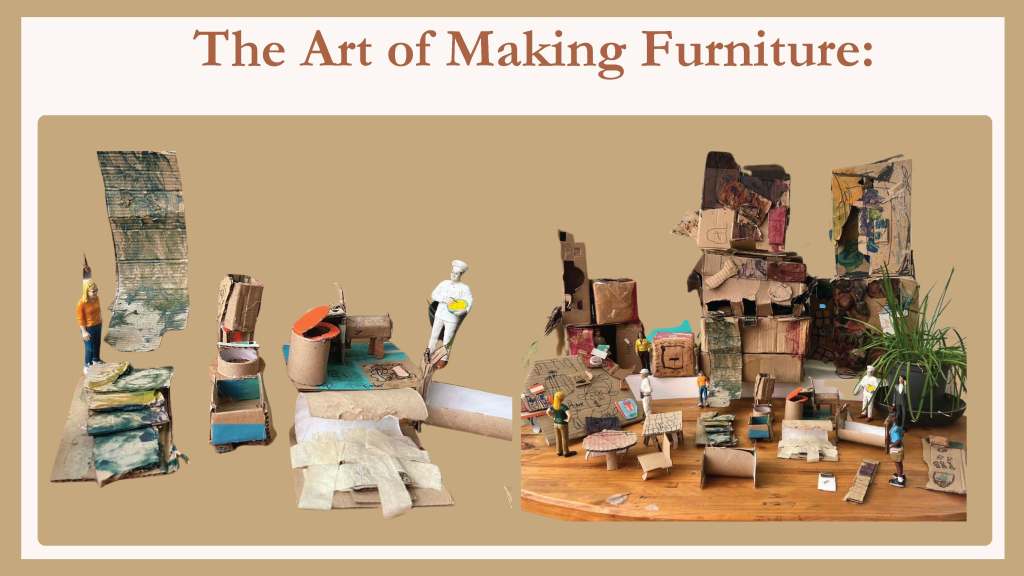
For Leonè the two main benefits afforded by the project were the children’s collaboration and team work, and the opportunity to introduce an environmental sustainability and recycling focus within the project. I loved how the floorbook documentation created ‘hook points’ throughout the project that supported the children to revisit and reconnect with their own learning, questions and inquiry. These “hook” moments, which helped to sustain the ongoing project, seemed to be supported by the introduction of new visual arts materials and processes, selected by the Penguin class teachers to give voice to children’s current thinking, explorations and problem solving.
Project Documentation: “…a tool for research, evaluation, professional development, planning and democratic practice” (Moss, 2012, p. 108).
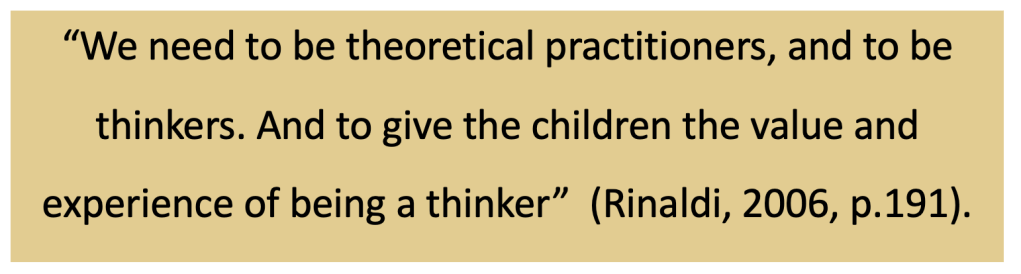
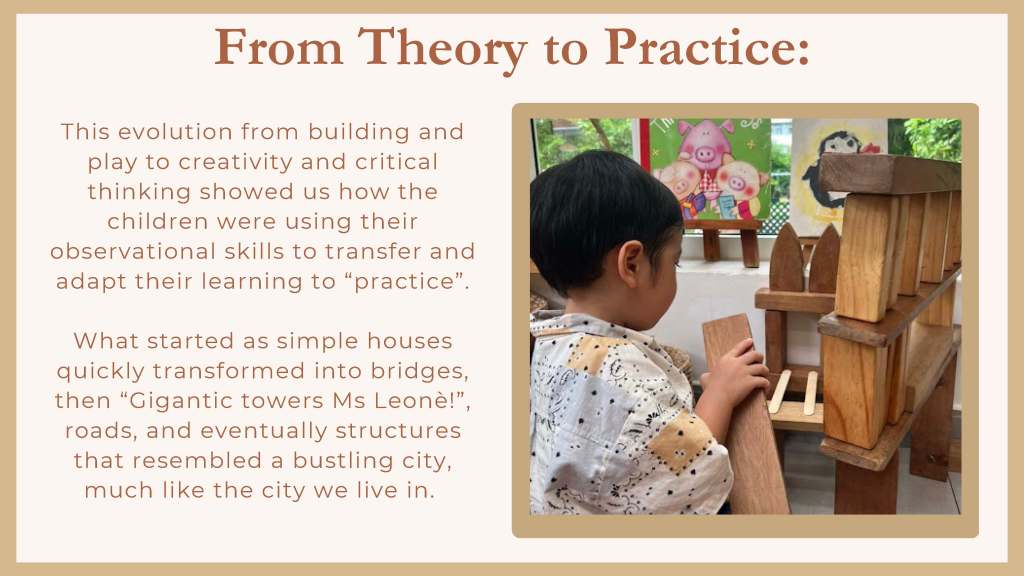
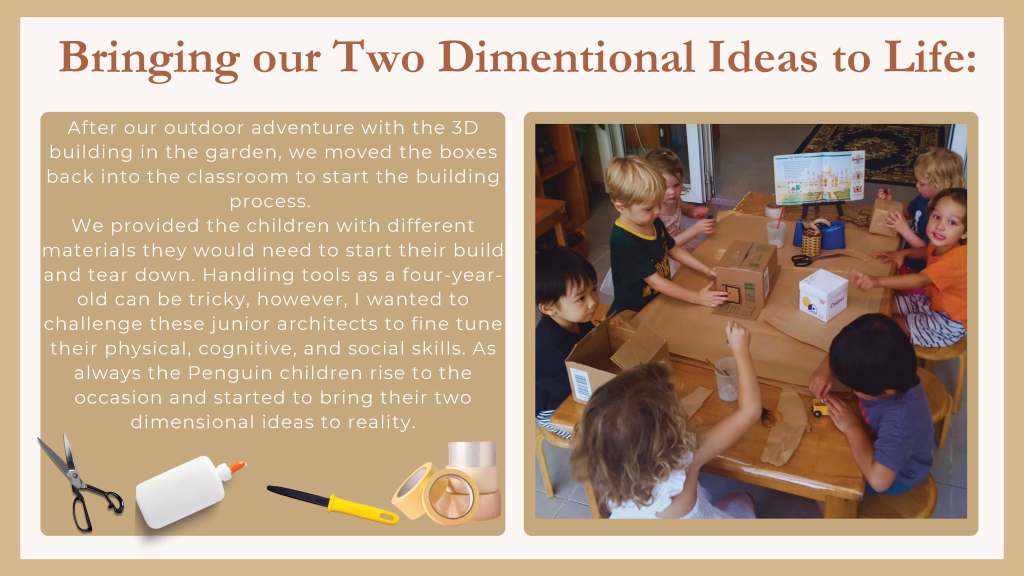
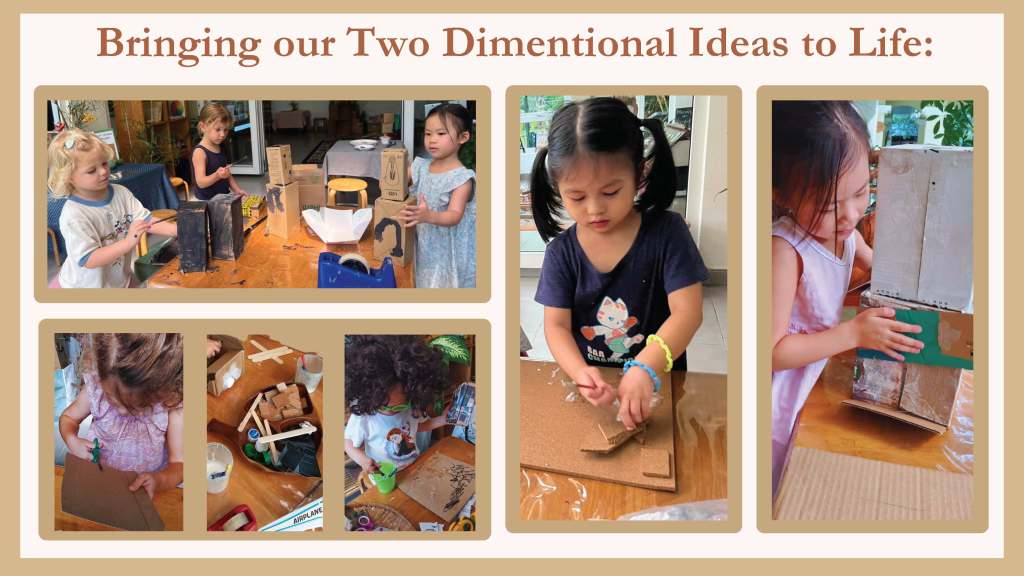
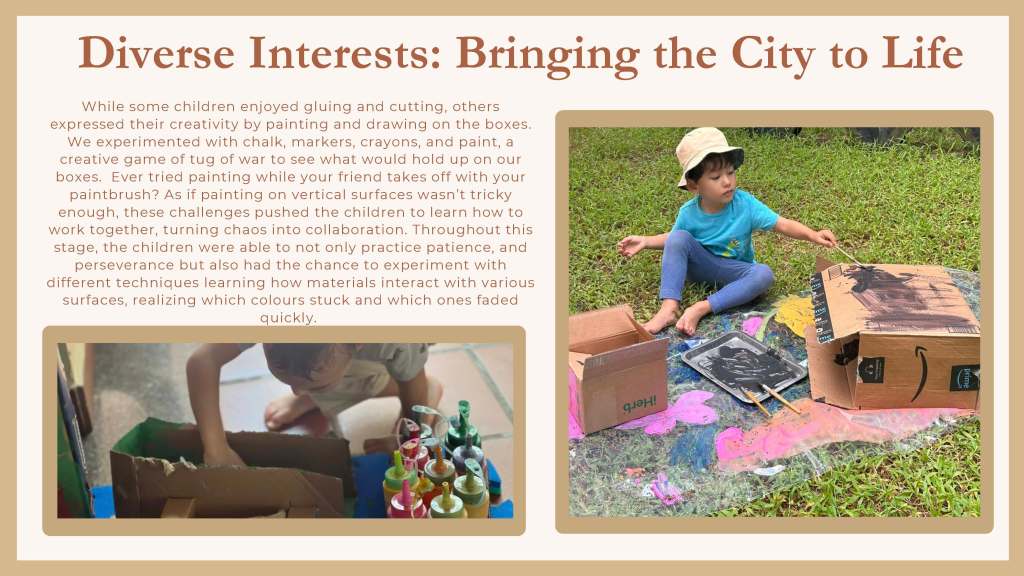
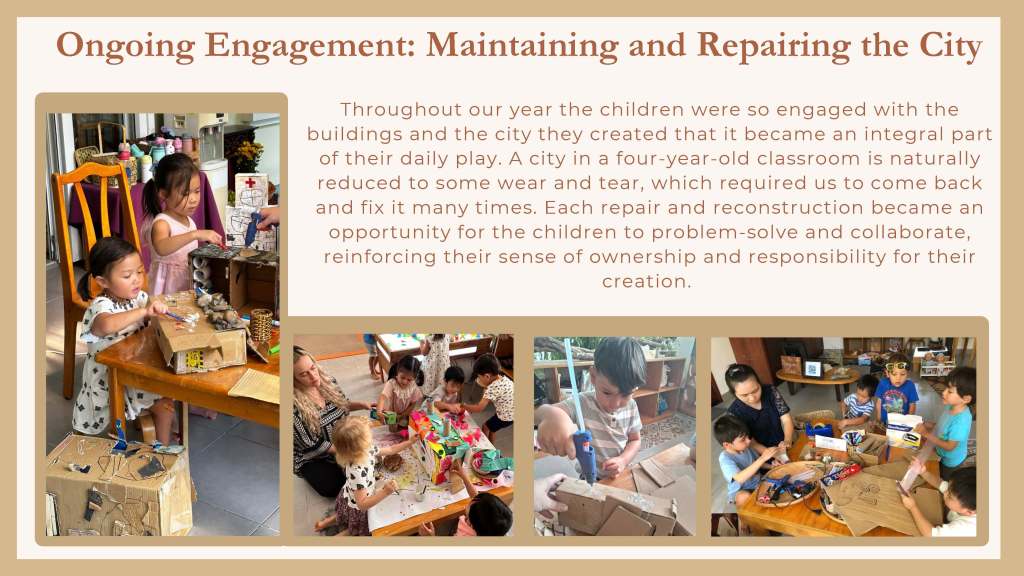
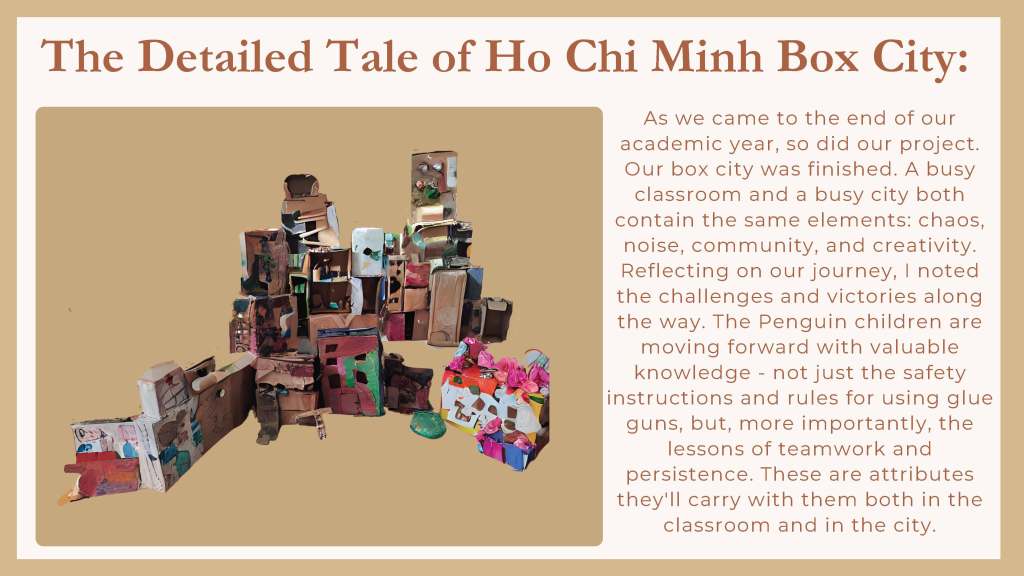
Please enjoy reading the following pages of Leonè’s documentation of the project. It speaks for itself – and I am sure it will inspire you as it inspired me!
As you read through the documentation, consider the following ideas to inspire reflection about:
- How to use a sustained project of inquiry to build collegial learning, reflection and growth.
- How co-workers can bounce ideas off each other in the construction of rich and meaningful learning for children.
- How the arts can be positioned as the glue which holds together projects of inquiry within holistic curriculum approaches.
- How family engagement is so important in making important connections between the home, the classroom project and the broader community (Chard et al., 2017).
- How to support children with tools and processes when their “ideas run faster” than the current materials or approach being taken.
- How to manage risk and advocate for children’s right to be EMPOWERED through engagement in real world problem solving using authentic tools and processes – e.g. introducing the glue gun.
- How to focus on learning dispositions such as persistence, determination and patience to support children to develop resilience and self-regulation skills.
- How to introduce the work of artists when a project or a process stalls or gets stuck as a way to suggest a new approach and spark interest in new materials and techniques.





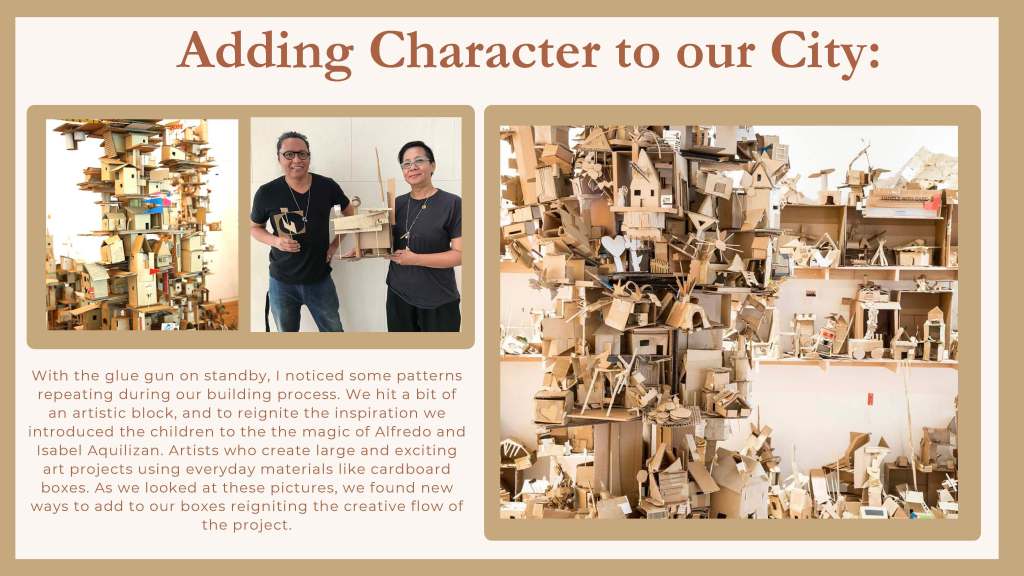
To learn more about the work of Alfredo & Isabel Aquilizan – see Museum of QLD.

Resources:
The project approach: A useful, user-friendly resource to explore the project approach further is the beautiful visual book Picturing the Project Approach by Sylvia Chard, Yvonne Kogan and Carmen Castillo.
Floorbook approach: To explore the floor book approach check out the wealth of books, videos and resources available on Dr Claire Warden’s website. Early Childhood Australia also offers an online training package about participatory planning, the Floorbooks Approach and Talking Tubs.
Box Cutters: if you are not sure what Leonè meant – check out this website!
References (and excellent further reading!):
Cagliari, P., Castagnetti, M., Giudici, C., Rinaldi, C., Vecchi, V., & Moss, P. (Eds.). (2016). Loris Malaguzzi and the schools of Reggio Emilia: A selection of his writings and speeches, 1945-1993. Abingdon, Oxon: Routledge.
Chard, S., Kogan, Y., & Casillo, C. (2017). Picturing the project approach. Gryphon House.
Gambetti, A. (2008). Author lecture notes from Reggio Emilia conference.
Moss, P. (2012). Micro-project and macro-policy: Learning through relationships. In C. Edwards, L. Gandini and G. Forman (Eds.). The hundred languages of children: The Reggio Emilia experience in transformation, Praeger, p. 101-113.
Rinaldi, C. (2006). In Dialogue with Reggio Emilia. Listening, researching and learning. London: Routledge.
 ecARToz: Inquiry & Arty Play with Dr Gai
I really appreciate the depth of information in this post—it’s clear you know your stuff and it makes for a compelling read!
LikeLike
Thanks for your lovely comment.
LikeLike
Thanks for your comments!
LikeLike